Purpose – Day 16 of A to Z Challenge

purposeToday’s word is PURPOSE. It may sound cliché, but writing must have purpose. So too must reading (we’ll get to that in a little bit). Know what you’re writing, whom you’re writing for, and why you’re writing. This helps writers hit home with their purpose. It is the driving force behind the greatest writing.

Readers may sometimes say they’re looking for an escape, and so writers do their utmost to provide that for them. When writers do this, they have a set purpose for the way in which they are writing. Therefore, readers, whether they are aware of it or not, have a purpose. They know what type of book they want to read (again, one in which they will find escape) and they know that it is the right fit for them. Their purpose is identified, and their instincts about how to best fulfill their reading expectations will be deemed true.

Opaque – Day 15 of A to Z Challenge

When writing, it is important to not be too OPAQUE or transparent. Don’t make the plot too difficult to understand, or, for that matter, too simple. Leave room for curiosity. Don’t give everything away (too transparent), and don’t keep everything a secret until the last chapter (too opaque). Let readers’ minds wander, but give clues to maintain interest.

For readers, think of all the fabulous books you’ve ever read. Now think of all the awesome books that are still out there to be read. You are free to explore any title you want. You are free to read contemporary fiction, historical fiction, biographies, children’s literature, and more. Have your pick of the lot and enjoy every last word. In doing so, you will realize that there is nothing at all opaque about reading. Your mind will be free and your hunger for more possibility, more exploration, more creativity will be satisfied.

Nostalgia is the Word – Day 14 of A to Z Challenge

nostalgia‘N’ is for NOSTALGIA. When writing, use experiences and memories. Capitalize on the effects of something that happened to you, or causes that got you there. Feed into nostalgia by remembering how you got a character out of a conflict in the past. It may help you figure out just how to solve a familiar problem in a new story you’re writing. Use nostalgia to your benefit. Establishing a solid store of connected memories and emotions can make for gripping writing.

When reading, it is pretty readily apparent how we use nostalgia. We find connections in books that give us emotionally charged moments of happiness, sadness, love, hate, anger, etc. We look for books that stimulate these feelings within us because we want to laugh, cry, and be moved. It is important to us to find books of significance, no matter how that significance directly impacts us.

Writing and reading always go hand in hand in some way, because writers write for readers and readers read what writers have written. There will always be a connection, and we just have to focus on how to maintain the nostalgia that writers are trying to create and read from the perspective of someone who is dedicated to seeing the present and future along with the past, because without the past, what you are reading might have been totally different. Everything builds off of everything else, and therefore nostalgia is a very important aspect of books (and life) in general!

How do you use nostalgia when writing and reading?

Market – Day 13 of A to Z Challenge

marketThe word that matches with letter ‘M’ for today is MARKET. You want to be sure to you are marketing your writing appropriately, if you are an author. Don’t attempt to sell a children’s fairy tale to an adult romance publisher. Also, set your sights on the right demographic. Consider who will read it. Be certain that the words and phrases you use are at least somewhat specific to that demographic so you meet the needs of the people you are most trying to impress.

On the flip side of this are readers. Readers need to know and understand as best as possible what market they are in regarding their reading preferences. You know what genres you like, what plots strike your fancy, whether you like fantasy or realistic settings, etc. Think about what makes you pick up a book and read it. All the factors you come up with, including the book blurb, someone’s recommendation, the cover art, or a variety of other items, influence you more than you know. You are being marketed to, and knowing what market fits you best is a step in the right direction to finding new titles for your book queue!

If you’re a writer, what market do you aim to please? If you’re a reader, what market are you in? If you’re a little of both, do you find yourself in the same market, or different ones?

Lifestyle – Day 12 of the A to Z Challenge

lifestyleLIFESTYLE is the word of the day for the A to Z Challenge. Both writing and reading should be part of your daily lifestyle. It is so important to make sure that what you love to do – in this case, write or read – is ingrained into your regular routines.

Writing is one of the most important ideas that gives creative license to do what you know and love. The same is true of reading. You can choose any author, any genre, any length of book, any anything really, and enjoy to your heart’s content.

Learn to think outside the box and see the world, your writing, your reading, your characterization, your emotions, and everything else in new, glorious ways. Let your lifestyle become your motivation to notice more, which will lead to stronger and more focused writing or more keen attention to detail when reading.

How do you focus your lifestyle around writing and/or reading? Share your thoughts below!

Kin – Day 11 of the A to Z Challenge!

characterToday’s word is KIN. This has to do with characterization, not just of family members, but of friends, enemies, and other characters that relate to one another in writing. It is a vital part of writing to work on and build relationships among characters and to enjoy and find connections with characters when reading.

When writing, outline characters’ physical qualities and personalities. The way someone acts if equally, if not more, important in some instances than the way he or she looks. A character’s personality can be equated to someone readers know, and this will give them a vision of what they think the character looks like.

When reading, it matters to readers how a character is portrayed. Sometimes it is black and white. They are a certain way and there’s nothing more to it than that. However, other times they are more subjective, and readers can learn to love or hate these characters, or maybe have a mixed relationship with whoever it is they are reading about. There are so many characteristics that can be reinforced by writers to make characters stand out as unique, yet relatable.

Whether you are a writer, a reader, or a little bit of both, think of one of your favorite characters from a book, a movie, a TV show, or anywhere else. Why does this character stand out to you? What made you love him or her? Hate him or her? Laugh at jokes he or she said? Consider those qualities and use them to write your next character or find other people to read about in other similar books of the same or different genres so you can compare, contrast, and find new sources for your writing and reading pleasure.

So, who is your favorite character (or one of them if you have many) and why?

Jello – Yes, You Read That Right – for Day 10 of the A to Z Challenge

jelloJELLO is the writing and reading word for Day 10 of the A to Z Challenge. It may sound silly, but when you make jello, you leave it in the refrigerator for a while before it becomes solid. Until this happens, it’s liquid. At that stage, it is not ready to eat, but when it takes on a more solid form, it becomes edible and tasty. The same is true of writing (except the edible, tasty part – unless you’re thinking metaphorically). Your writing needs to be worked on before it can become a solid structure. You want to make sure you focus on all details necessary to make your work well-rounded.

For reading purposes, the idea of JELLO also works, because you need to hone your reading preferences, find the authors who suit your purposes, and then throw yourself headfirst into the bowl of the solid writing that the authors have penned.

Writers and readers must find a way to gel together and form common bonds. This will make for more engaged readers, more prolific writers, and more thoroughly engaging tales that hold the interest of both types of people.

What is your letter “J” based on writing and reading? How does it work for you?

‘The Bully Book’ by Eric Kahn Gale Book Review

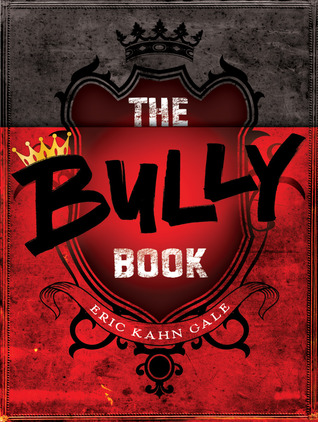
bullybookIn ‘The Bully Book,’ Eric Kahn Gale has perfectly captured the angst of a kid who just wants to be accepted but doesn’t quite know how to go about making that happen. Main character Eric Haskins has started his sixth grade year as “The Grunt” – a title he did not ask for and does not fully understand. What he does know, however, is that there are other students, known as Bully Bookers, who have a “Bully Book” teaching them how to label him as someone at the bottom of the barrel while they rise to the occasion, claiming all the popularity and instilling fear in people like Eric who just want to be left alone. He tells his story through journal entries that explain how the pages of the book apply to him and what he is doing about them.

Since isolating the Grunt from the rest of the general school population is one of the missions of the Bully Bookers, they do just that by keeping Eric away from his good friend, Melody. Even his old friend Donovan is now hanging out with the mean kids, mostly in what seems his attempt to maintain a semblance of popularity after having lost some weight and being accepted by people he thought he’d never be hanging out with like Jason and Adrian, true Bully Bookers who know how to keep people down while building themselves up.

Through a series of investigations that Eric embarks on alone, as well as with the help of others who have been down the “Grunt” path before, readers learn quite a bit about Eric’s plan of action. This includes how he plans to get himself out of the mess, along with some haunting realizations about where the Bully Book started, how it was put into action, and who it has affected over the years besides just himself and the few people he’s met along the way.

A quick and extremely engaging read, the story is on point regarding how the bullying epidemic is still prevalent today, after having been around for more years than most would care to admit. Eric Kahn Gale has only cracked the surface of what kids can do to realize their worth; however, a start is a start, and if more books could be written and spread around elementary and middle schools (and even high schools and beyond!) like this one, maybe bullying would begin to diminish, even if only to a degree. He has started readers on the right path, and students, educators, and parents alike would be wise to read this novel and share its morals with all who will listen.

You can find ‘The Bully Book’ by Eric Kahn Gale here.

Instinctual Integrity – Day 9 of A to Z Challenge

instinctToday’s post brings another double dose – this time of the letter “I” as we delve into INSTINCT and INTEGRITY.

It’s said that you should trust your instincts. Rather, I say to use your instincts. Intuition is a strong tool, and if you feel something is right or wrong for your writing, trust yourself. However, it can’t hurt to make a note of what you choose not to include, as you never know how it might come in handy in the future. If you don’t write it down, you’re more likely to forget it. Keep all your thoughts, as you never know when they might become useful and creatively stimulating in a way you never considered.

The same is true for your reading. If you aren’t enjoying something, moving on from it is probably a wise idea. It will bring you that much closer that much more quickly to reading something you will find yourself thoroughly engrossed in. Using your instincts to help you find your favorite genre, learn more about your favorite authors, riffle through bookshelves, judge books by their covers (or choose not to), and decide which order to use for your queue of books will ultimately hone your instincts and make it easier to do all these things the next time.

Regarding integrity, writers and readers must both possess this characteristic. Without integrity, writers may not be living up to their own wishes and desires for what they want their writing to be or how far they want their writing to go. They may be giving in to what everyone else wants based on critiques, reviews, or a number of other things. So long as writers have integrity, readers will realize this and be more invested in the writing that they know the author put every bit of themselves into wholeheartedly. Readers must also have the integrity to say what they feel, which may sound counterintuitive based on the idea that writers should listen to themselves first, but it doesn’t mean that they can’t take stock of what readers have to say based on where they see snippets of truth in said reviews that can help them grow stronger in their writing craft.

It may be an instinct to have integrity, but sometimes it’s important to not take everything and anything for granted and instead consider instincts first, which will give you more integrity, making your role in the whole writing and reading process as integral as ever.

How do you use your instincts? Do you trust them? Are they more trouble than they’re worth? Share your thoughts in the comments below!

‘Two-Way Street’ by Lauren Barnholdt Book Review

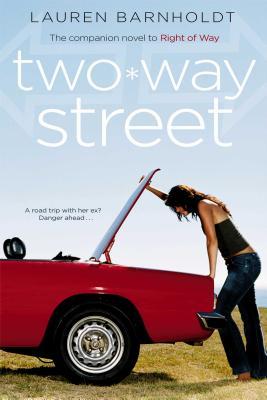
street‘Two-Way Street’ by Lauren Barnholdt is yet another great addition to her collection of books. The premise revolves around main characters Courtney and Jordan, who have just broken up but are road-tripping to college together since they already had the trip planned. The issue is that their being apart is not something Jordan really wanted in the first place, but circumstances spiraled out of control, and he found himself at an impasse regarding how to avoid the situation altogether. Making matters more difficult is Courtney’s dad, who despite being nice to Jordan, doesn’t seem to want them together, at least from Jordan’s viewpoint. As the novel progresses, we learn more about the intricacies of Jordan’s relationship with Courtney’s dad, and how everything got to be more mixed up than Jordan could have ever thought possible.

Other characters in the story include Jordan’s mom, who plays a pivotal, yet not overbearing role within the novel, as well as Jordan’s best friend B.J., who is dating Courtney’s best friend Jocelyn. The friendships in the novel are well worth reading, as they are realistic and engaging, and they show how sometimes judgments on the part of some can result in misunderstandings that can lead to annoying, yet other times humorous, results.

I was quite shocked when the main twist in the story was revealed, as I did not see it coming. It shows the strength of Barnholdt’s writing style to make the reader curious early on and then, as the storyline progresses, reveal the truth of the matter. Even after this point, the story still kept me hooked, as Courtney still didn’t know the truth, and Jordan was keen on sharing it with her in the hopes that maybe, just maybe, he would have the chance of being with her again. The time never seemed to be right, however, which heightened the suspense of what would occur when he actually revealed the truth to her.

Their relationship woes and their friendships are traced through the back-and-forth viewpoints of Courtney and Jordan. I especially liked how we were not only immersed in their present-day relationship, when they were broken up and driving together, but we also were able to flash back to their past, learning how they met, started dating, and eventually broke up. Stepping into the future at the end of the novel by learning what happened after the trip was over was also a nice addition to the plot. I will definitely be picking up more of Barnholdt’s novels, as I have enjoyed several of them already and am eager to share in more of her characters’ journeys.

You can find ‘Two-Way Street’ by Lauren Barnholdt here.