Blog Takeover – Favorite Movie & TV Show

Visit ‘Eating Between the Lines’ on Facebook for more of my blog takeover!

Here’s one of the questions posed on the blog:

What is your favorite high school movie? TV show?

Right now I’m really into One Tree Hill, but if I had to choose a TV show that was set for at least a little while in high school, I’d choose Gilmore Girls. I loved watching Rory navigate life at Chilton and then come back home to Stars Hollow and have an entirely different life to live than the one she’d participated in during the day while at school. I also love Freaks and Geeks, among so many others, but I’m partial to period pieces, and Freaks and Geeks is set in 1980.

In terms of movies, I’d probably choose either Grease or Never Been Kissed. I wouldn’t really fit into the world of Grease, but it doesn’t mean I don’t love the fact that it’s set in the 1950s and stars John Travolta. In the eighth grade, it was my all-time favorite movie! I also love Never Been Kissed because who hasn’t wanted to go back and see what high school would be like now that you know how to possibly deal with people a bit better? I even wanted to do this while I was in high school – visit other schools where I had friends and see what life would be like if I switched schools for a while.

Also, in a different vein than the movies already listed, I really enjoy teacher-based movies set in high schools, like To Sir, With Love and The Ron Clark Story, among others. Even though these aren’t really “teen movies,” they serve the purpose of showing teen life through a different lens.
Blog Takeover – Favorite Reading Genre

Visit ‘Eating Between the Lines’ on Facebook for more of my blog takeover!

Here’s one of the questions posed on the blog:

Tell us about your favorite reading genre, including your favorite book and author.

I love contemporary young adult novels. I’ll read a variety of genres (including memoirs, biographies, and romance), but contemporary YA is my favorite to read, and it’s my favorite to write. There’s a complexity to that genre many don’t see, because they think that writing about teens is easier in some way than writing adult fiction or non-fiction. But there are so many issues that teens deal with that can be explored in the YA genre, and I can’t pass that up – not reading or writing-wise. I have many favorite books, but if I had to choose one, I’d say ‘Harry Potter and the Deathly Hallows’ by J.K.Rowling. Even though it doesn’t specifically fit into the contemporary YA genre, there is realism in the magical world that exists in the story, and definite YA themes. I also love any YA books by Sonya Sones, Meredith Zeitlin, and many more wonderful authors.

Blog Takeover – High School Memories

Visit ‘Eating Between the Lines’ on Facebook for more of my blog takeover!

Here’s one of the questions posed on the blog:

What’s your favorite memory of high school?

I may be in the minority, but I really liked high school, and that’s part of why I think it’s so easy for me to fall into the habit of writing in the YA genre. I’ve always loved teen TV shows and movies, and still, to this day, I go out of my way to watch and enjoy them. My favorite memory of high school, since I have to pick just one, is probably being asked to homecoming my junior year by the guy I really liked. Even though he asked me just as friends, the level of excitement and anticipation I felt due to the crush I had on him is something I will never forget!

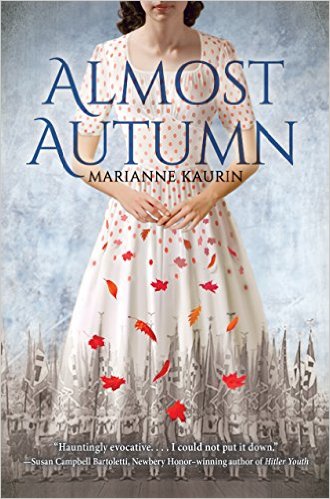
‘Almost Autumn’ by Marianne Kaurin Book Review

‘Almost Autumn’ by Marianne Kaurin, and translated by Rosie Hedger, is a retelling of the Holocaust and its impact in Norway. The story, while fictional, depicts both the innocence and evil that pervaded World War II, and chronicles the hardships and losses that were all too common during that time.

Underlying the overarching theme of the Holocaust and how it overshadowed almost everything else at that time is the love story of a young girl, Ilse, and her next-door neighbor, Hermann. Their relationship is one of young love as they find themselves unable to stop thinking of each other, but their time together is cut short even before it truly begins when Hermann finds himself secretly working in the Resistance, trying to help Norwegian Jews leave for Sweden so they can avoid what would otherwise be an untimely fate. Though his time is being taken in this way, he and Ilse, who is Jewish herself, still share a common bond of wanting to be together and seeking out ways in which they might do so.

This part of the story – that of Ilse and Hermann – seemed as though it would be one of the main plots of the entire novel, yet it felt as though more of the story revolved around learning of Ilse’s family and their daily life and routines. The story started getting more interesting when Ilse’s father was taken by the police, not knowing when or if he would return or see his family again. One month later, when the police return for the rest of the family, the repercussions from that incident linger throughout the remainder of the story and the future of the characters who remain once the war ends.

The story often read in a very unemotional way, sometimes seeming as though it was merely telling what was happening rather than showing it. Even though this is a story of truth and courage in the face of adversity, and the fact that I know people who lived through the Holocaust themselves and have literal war stories all their own, I found myself thinking more action would have helped the story along, and more explanation of what happened to some of the characters near the end. However, it is completely possible that the author meant to leave this open-ended. Too many families were torn apart during World War II, some never knowing what came to be or if their loved ones survived. In this way, the story was most certainly true to life, and this is to be respected, as it did end up bringing about emotion even without the action.

‘Almost Autumn’ is a story that will allow you to ponder how life can change in an instant – and how, despite the atrocities that life presents, good still has a place in the world.

You can find ‘Almost Autumn’ by Marianne Kaurin, translated by Rosie Hedger here.

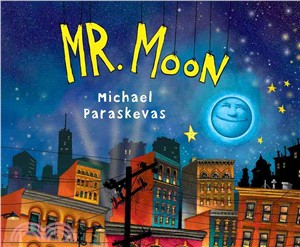
‘Mr. Moon’ by Michael Paraskevas Book Review

‘Mr. Moon,’ written and illustrated by Michael Paraskevas, is a soothing read about what the moon does while out at night. The way the story says goodbye to the sun in the beginning and welcomes it back at the end serves as nice bookends to a sweet story. The illustrations will heighten children’s appreciation of the tale, from the moon wearing a nightcap, to the stars, sheep, clouds, insects, animals, and sounds that populate the night. Even though it is dark out and silence would seemingly abound, there is much to be done under the light of the moon. The fact that the moon has a face makes it even nicer that it is enjoying the work it must do to turn night into day. As the sun resumes its place high above the ground, the moon yawns and rests until its work begins once more, which creates a nice potential discussion of how teamwork really does make the world go round.

The colors and attention to detail on each two-page spread will engage and enlighten young readers, as well as their parents. Night changing to day and day to night are ideas that are taken for granted, but Paraskevas highlights how there is much to be done to make the transition smooth, and the average person might just see magic happen if they stay up to wish on a shooting star or try to see if the cow will really jump over the moon. ‘Mr. Moon’ is a whimsical read that dares readers to consider what is actually happening in the moonlight and how to take part in it until daylight once again sets in.

Even though the story is solid and incorporates unique ideas, it didn’t hold the interest of my three-year-old quite as much as some other books; however, he did enjoy pointing at each picture and stating what it was. The illustrations made up for where the story was slightly lacking.

*Review originally posted on YABooksCentral.com*

You can find ‘Mr. Moon’ by Michael Paraskevas here.

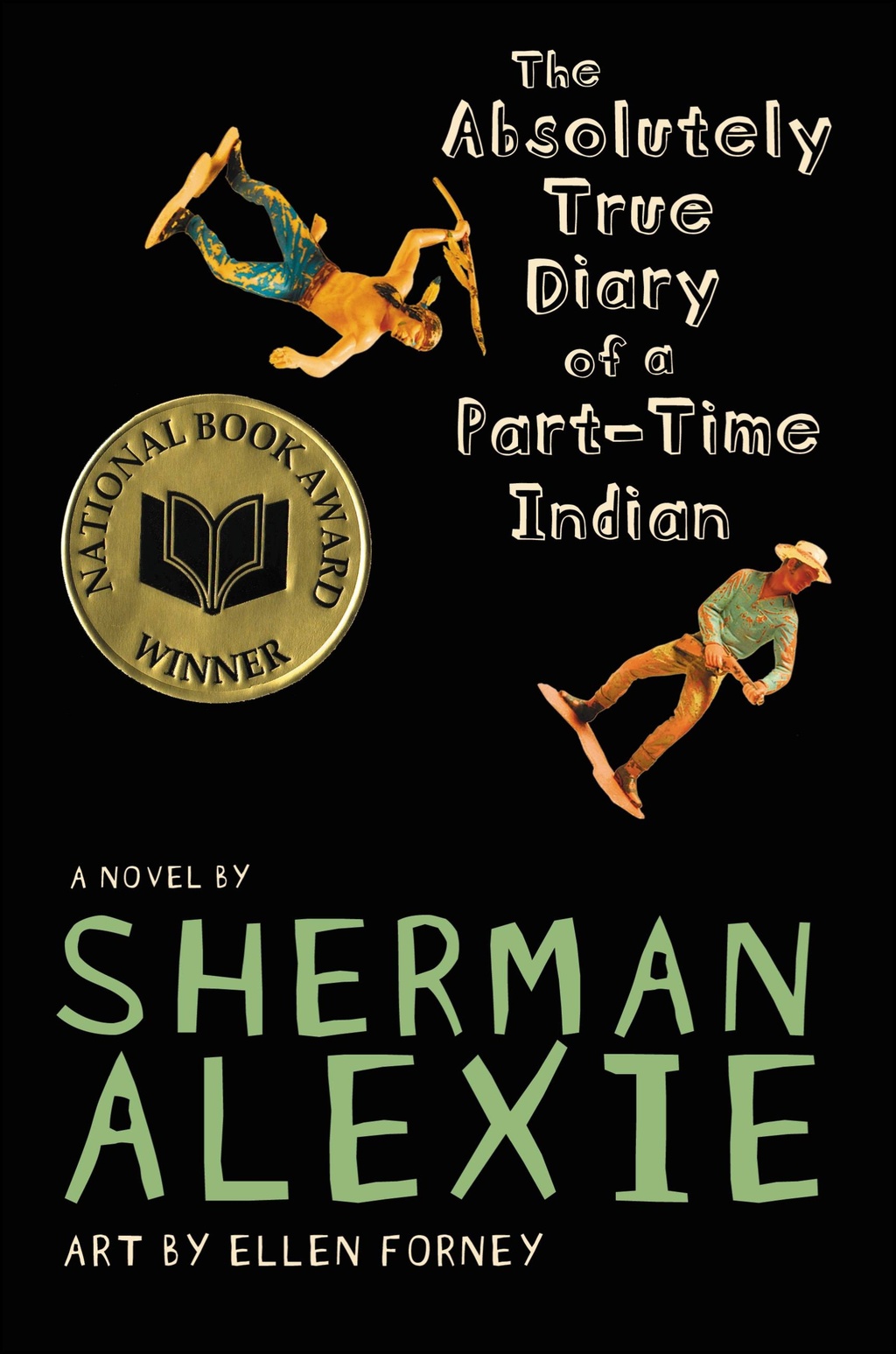
‘The Absolutely True Diary of a Part-Time Indian’ by Sherman Alexie Book Review

‘The Absolutely True Diary of a Part-Time Indian’ by Sherman Alexie creates a world in which Junior, a teenager and hopeful cartoonist, feels stuck. Growing up on the Spokane Indian reservation is not all fun and games, as he shows through carefully constructed cartoons that readers can view throughout the book. Aside from his best friend Rowdy and his own family, everyone picks on him. A series of events transpire, including his sister moving away, some bullies getting the better of him, and more of the like, and Junior decides his only way out of the muck he feels he’s stuck in by staying in Wellpinit on the reservation is to do the only thing he can do to rid himself of his troubles – leave. So he does, and ends up in Reardan, where he starts off his freshman year feeling very unlucky in life despite the lingering hope that making this change will only make things better.

Little does he expect that things will have to get much worse to have a chance of getting better. At first, no one wants to accept him at Reardan, and everyone on the reservation, except for his family, basically shuns him. This includes Rowdy, who even though he has always been on Junior’s side, goes full force against him for leaving, even though Junior tried to get Rowdy to come along and go to school with him in Reardan. It really is quite bothersome how Junior considers Rowdy to still be his best friend, especially due to Rowdy’s anger and torment toward Junior as the novel progresses. It does seem only natural that someone wouldn’t want to give up on and lose his best friend, but Rowdy’s behavior toward Junior is nothing short of verbally and physically abusive, and Junior’s holding on to hope that he and Rowdy will be able to patch things up is a sad testament to the idea that you can truly go home, because, as Alexie makes pretty evident, home is not necessarily where you lay your head. Junior finds that home is more a state of mind as he tries to make sense of the world around him, including new people he encounters in Reardan, and how he copes with figuring out how to portray himself so he is seen as more than just a stereotype.

Alexie’s venture into the young adult genre is more than welcome, as his ‘The Lone Ranger and Tonto Fistfight in Heaven’ was a different genre, yet equally compelling and relevant. It is always nice to see authors take on and win at new genres.

You can find ‘The Absolutely True Diary of a Part-Time Indian’ by Sherman Alexie here.

‘Autumn in the City of Angels’ Book Review

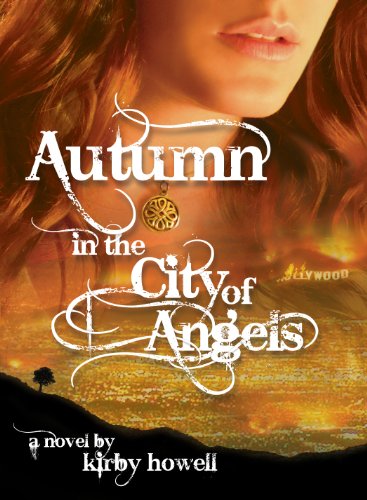
autumn‘Autumn in the City of Angels’ by Kirby Howell is an addictive dystopian read that reads so smoothly that it will feel as though you are watching a movie. It doesn’t hurt that the writers, Dana Melton and Jessica Alexander, who write under the pen name Kirby Howell, met while in a script writing class at the University of Alabama. Their attention to detail in regards to how the world might look if a disaster occurred is striking.

Lovers of contemporary realistic young adult novels will enjoy venturing into this dystopian world, as it starts out in the present day, when an epidemic is sweeping the Los Angeles and surrounding areas, and maybe even the world. Autumn is thrust into the unknown, navigating how to live her life in the confines of her apartment while her parents, best friend, and anyone else she knows has been killed by the Crimson Fever that has infected them. She lives her life alone for a while, yet soon finds comfort with a teenage boy, Ben, and his younger sister, Rissi, who are also trying to scrape by and find a way for themselves after losing their own father to the Crimson Fever. The novel was made even more realistic by taking the setting of Los Angeles one step further and making Autumn’s eventual hideout the area underneath Hollywood High School, a landmark of sorts in the LA area. This made the action seem even more real than how it already came across.

Before meeting Ben and Rissi, Autumn tries to join up with a group called The Front, yet they turn out to be not what they seem, and then she meets a boy named Grey who says he will return for her when it is safe. Despite her waiting, he never comes, but through a series of events, she comes upon him yet again, and is enthralled by him. Her infatuation only grows as she spends more time with him, and she learns that he has secrets that may threaten to tear apart their new and fragile relationship. At first it may seem like the twist that is revealed about Grey does not work so well and is somewhat unbelievable, but it quickly takes shape and seems totally fitting for the storyline.

One might wonder if anyone survived beyond the basic vicinity that the vast majority of the novel takes place in. Even though readers are made to expect that Autumn’s parents have been killed by the Crimson Fever that has seemingly swept the globe, there is no real way to know exactly how much of the population was infected beyond the Los Angeles and surrounding area in which the book is set. With sequels of the novel available, it will be interesting to find out if this is touched upon in any further detail.

‘Autumn in the City of Angels’ will not only satisfy the cravings of readers of both dystopian and contemporary realistic genres, but it ends with a gripping revelation that will leave readers aching for more.

*Original review posted on YABooksCentral.com.*

You can find ‘Autumn in the City of Angels’ by Kirby Howell here.

‘Saving Red’ by Sonya Sones Book Review

savingred‘Saving Red’ by Sonya Sones is an unabashedly riveting tale of Molly, a girl who has fielded her fair share of trouble, yet doesn’t back down in the face of what could be considered nothing less than overwhelming. Molly’s relationship with her parents is strained, to say the least, and she makes mention of her brother, Noah, who has disappeared from her life. At times readers may wonder if he disappeared in the literal or figurative sense, but it is made clear soon enough, compounding the issues that Molly is dealing with when she comes upon a homeless girl named Red.

Red is homeless, yes, but she is unwilling to accept charity, citing her oft-used phrase, “I better not,” to turn down any offer presented to her. Molly tries unflinchingly to provide Red with necessities, sometimes with help from Cristo, a cute boy Molly meets on a Ferris wheel. Whereas in some books the fast-paced nature of a 6-hour long in-person relationship would seem rushed and maybe even forced, Sones is at her best yet again, making readers see that Molly and Cristo share a connection at the tender age of fourteen that makes them eager and willing to get to know each other through texts, Facetime, and phone calls when Cristo leaves on vacation mere hours after happening upon Molly originally. Their relationship and ensuing troubles when Cristo seemingly disappears brings out the teen angst that any fourteen-year-old would have if in a similar situation.

Yet Molly doesn’t have time to worry about Cristo as much as she’d like to wallow when he doesn’t respond to her texts. She has to deal with Red and the voices that inhabit Red’s mind. By trying to help Red, Molly finds that her understanding of what happened when her brother Noah went missing comes to a head, and she has to focus on the ensuing internal battle that she feels, and which Red tries to help her come to grips with. Despite Red’s craziness, which Red fully understands she herself is dealing with, Molly can see the truth and wisdom in Red’s words, as she tries to help Molly cope with the losses she has sustained.

In ‘Saving Red,’ relationships are tested on all levels, including family, friends, and romances. Sones has a way of captivating readers’ attention and making them see the readers as nothing less than real people with real problems, who deal with them as only as those people could. They are all unique, independent, strikingly unsure characters who find their truth in their own ways as the story goes on. It is a testament to Sones’ writing style that she can capture all of this in short, to-the-point verse. The last few words of the novel leave room for a whole new story that Sones will hopefully write one day. Those last words should provide hope, making anyone’s heart leap – especially those invested in the outcome of Molly’s story.

You can find ‘Saving Red’ by Sonya Sones here.

‘Stealing Away: When Wrong is the Only Choice’ by Amy Ruth Allen Book Review

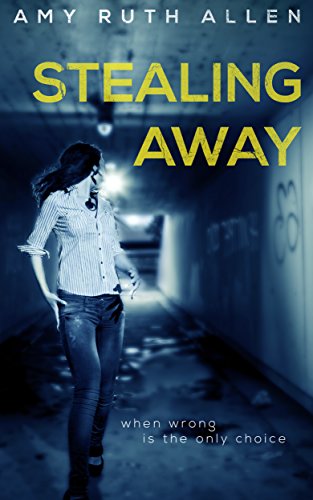
stealingaway‘Stealing Away: When Wrong is the Only Choice’ by Amy Ruth Allen is a deeply introspective look into the life of a girl who has become deeper and deeper involved in a mess, at least partially of her own making. Jaynie Haart lives life on the run, metaphorically at first, and before long, literally. The death of her police officer father, and the subsequent deterioration of her mother into a drug addict, has catapulted Jaynie into a state of fear and the desire to take on desperate measures that she feels will only serve to help her rather than continue to hurt her.

Little does Jaynie know that taking on another girl’s identity, followed up by those of even more girls, will take a horrible toll on her sanity. The fear she sustains throughout the story for her life, both before and after she steals away, is understandably terrifying. The relationship her mother has found herself rooted in with the man Jaynie calls Gross Dave has driven someone to try to get Jaynie out of her mother’s house, into the care of Social Services. Even though it seems the simpler way out in many ways, Jaynie decides that she knows better, which causes her to uproot her entire existence and take on new personas, new physical looks, and new locations all to get away from the life she has been stuck in for far too long since her father died.

Many readers might say that Jaynie truly had no other choice – that she had to get out of there no matter the cost, and stealing identities was the only way to make that happen. Others – those with a bit more common sense – are more likely to say that she should have taken the advice of Social Services. If she was planning to get away from her mother anyway, going with Social Services wouldn’t necessarily have spelled the end of the world for her mother. When she skipped town, she left herself with no way to keep her mother safe, but at least being in the custody of Social Services would have afforded her the opportunity to know more of what was going on with her mother, and maybe she could have helped her more in that way.

Amy Ruth Allen has created a world where instincts matter most, and fear, coupled with pain, comes knocking at every turn. Jaynie’s relationships with those she meets when she arrives in her main stop along the way – Sierra Beach, California – creates more trouble for her as she falls for a boy, Zach. This relationship seemed to develop far too quickly, but sometimes people do just hit it off, so realistically, their fondness for each other could have grown as quickly as it did in the book. Yet, it seems as though Jaynie’s secrets and Zach’s elusive nature would have caused them to question more about each other earlier on, rather than expressing interest in a relationship when they hardly knew anything about each other. The story is one of courage, stamina, and defeating the odds – a combination that is not easily mastered, but which keeps readers’ attention as they learn whether Jaynie will win or lose at the crapshoot that has taken over her life.

Visit www.yabookscentral.com/community2/13243-beth-rodgers/profile to see more of my reviews.

‘The River’s Edge’ by Tina Sears Book Review

riversedge‘The River’s Edge’ by Tina Sears is a hauntingly telling read, with powerful descriptions. Readers will find their emotions stirred and their consciences wracked as they struggle to understand main character Chris’ position and how she will cope with the losses she finds herself encountering during a summer meant to be fun and carefree. Between her parents’ impending divorce and her desire to fit in, she deals with startling truths that no person, young or old, should ever have to find themselves saddled with.

The story started off slow but picked up very quickly, throwing readers into the summer of 1976. Chris’ mother takes her to live with her Aunt Lori and Uncle Butch and their two girls, Wendy and Paige. Chris becomes fast friends with the girls and spends her time trying to get into the inner circle of friends that Wendy used to have and still longs to be a part of. Julie is the head of this group, and Chris finds that trying to impress Julie gives her a sense of belonging. The inner circle brings her moments of despair as well, though, when she realizes that looking older and doing risky things like smoking and drinking are not all they are cracked up to be. Her relationships with her cousin Wendy and friend Julie lead her into the previously unknown territory of boys, and she enjoys the attention, much to her later chagrin.

Chris’ journey is one of self-discovery, as she navigates the tricky waters of self-esteem, self-worth, and the courage it takes to be stronger than you ever thought you needed to be. The story is often written with simple words, but they serve as a subtle reminder of a simpler time, when life shouldn’t have been difficult, but still found a way to be. Many a lesson can be learned through Sears’ compelling writing, including how even those who have people to confide in can get swept up in feelings of loneliness and alienation. Hiding inside one’s own body and mind is a scary concept that no one should feel they have to deal with alone.

It was hinted at that there was the possibility that Chris was not alone in her troubles and that her cousins and friends could have even been navigating the same murky waters that Chris found herself constantly treading. It would have been nice to hear if these were just thoughts Chris had or if there were even shreds of truth to them. However, the uncertainty creates a compelling wonderment that would not exist otherwise. It also shows how Chris, who often feels alone, can find solace in but a few words that a friend of hers in the story plainly states: “You can see everything. Or you can see nothing at all.” There are no truer words, especially when it comes to questioning oneself and others, and knowing when to speak up and forget about burying one’s head in the sand. Sears’ debut novel packs a punch and engages readers with real-life issues that many teens, and even many adults, face. A definite title to add to any contemporary young adult fan’s reading list.

You can find ‘The River’s Edge’ by Tina Sears here.

Visit www.yabookscentral.com/community2/13243-beth-rodgers/profile to see more of my reviews.