‘When Paul Met Artie: The Story of Simon & Garfunkel’ by G. Neri Book Review

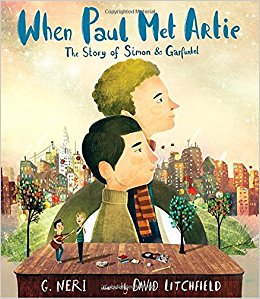
‘When Paul Met Artie: The Story of Simon & Garfunkel’ by G. Neri, illustrated by David Litchfield, is an artistic and lyrically engaging biographical account of Paul Simon and Art Garfunkel’s wonderful, yet troubled relationship and joint career. It doesn’t steer away from the issues that plagued them and the times they thought they were done with the business. Their story is not so different than others who have come before or after them, but their dedication to the craft and their ability to overcome the odds even when faced with the highest forms of adversity showcases how they refused to let their struggles define them and rather found ways to move past them or overcome and beat them.

From discovering how the two met to learning how the ‘The Sound of Silence’ came to be written, there are so many interesting and engaging facts that even fans of the pair might not necessarily know. It takes a bit to really feel as though one’s teeth are digging into the story, but the illustrations only bring more flavor to the writing, intensifying readers’ understanding of who the men are and how they got not only their start, but the strength to carry on in their careers.

There is always something new to learn, even about those whom you think you already know. ‘When Paul Met Artie’ proves this to be true. Fans of the pair will find the story honest and engaging, while those who are not so aware of who Paul Simon and Art Garfunkel are (namely the kids for whom this book is written) will learn something about the past and will hopefully be able to share in the beauty of Simon and Garfunkel’s music. It transcends the time period in which the songs were written, giving way to a whole new generation of listeners who can gain something from their lyrics and strengthen the world as a result.

You can find ‘When Paul Met Artie: The Story of Simon & Garfunkel’ by G. Neri here.

*Review originally posted at YABooksCentral.com*

‘Two Truths and a Lie’ by Ammi-Joan Paquette and Laurie Ann Thompson Book Review

‘Two Truths and a Lie: Histories and Mysteries’ by Ammi-Joan Paquette and Laurie Ann Thompson is a fun read, chock full of historical and more contemporary facts and fiction. It brings a whole new level of intrigue to the icebreaker game of two truths and a lie, shedding further light on topics that either never fully saw the light of day or were too obscure to bring up in the first place. Some of the stories are a mix of truth and fiction, making it harder to discern how deep the lies run and how believable the truths really are.

Any lover of histories and mysteries, as the subtitle of the book mentions, will be taken in by the stories. Even though some are much more interesting, creative, and meaningful than others, the way in which the book is written will keep anyone reading and guessing. Some truths seem quite far-fetched while some lies will make you question your grasp of fiction.

A fun nonfiction journey through a wide variety of stories, ‘Two Truths and a Lie’ forces readers to engage with research and question anything and everything. For kids, it will teach that not everything can be believed, even if presented as truth, and for adults, it will re-instill the idea that research is a necessity, especially in this day and age when the prevalence of technology and social media can make anything seem true. Finding one’s way around being drawn in by tempting headlines and seemingly true stories can be helpful in so many facets of life.

You can find ‘Two Truths and a Lie’ by Ammi-Joan Paquette and Laurie Ann Thompson here .

*Review originally posted at YABooksCentral.com*
‘Why Can’t I Be You’ by Melissa Walker Book Review

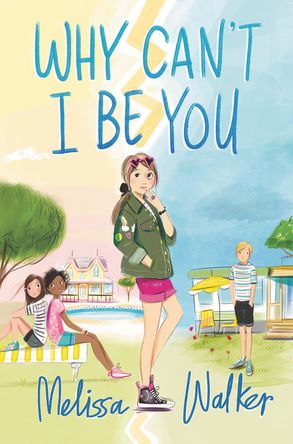
‘Why Can’t I Be You’ by Melissa Walker follows main character Claire through the summer when she turns twelve. Even though life should be pretty easy and fun at such a young age, Claire finds herself troubled by issues of friendship and perception. Having lived her life in a trailer park, she has never thought herself less than anyone else, but with more and more not-so-joking statements coming up from kids she goes to school with, she begins to wonder if her life is not as good or normal as she once thought.

Being pretty young still, and not being able to understand that life doesn’t have to revolve around where someone lives or how much money they have, Claire lashes out at those close to her, not meaning to hurt them, but trying to find meaning for herself in the issues that are plaguing her. Her best girlfriend, Brianna, has also moved into a new and pretty ritzy home with a fancy new pool and lots of other items that Claire can only wish for, and her other best friend, Ronan, who lives in the trailer park with her, isn’t helping to calm her nerves. Rather, he is trying to fit in more with the people who Claire sees as making fun of them, and it makes her question her perception of life in general and what is truly important.

Little does Claire know that not everything is always as it seems, and even those who seem like they have everything together and are living perfect lives are often hiding secrets of their own. Brianna’s cousin, Eden, is one of these seemingly perfect people that everyone has known at some point or another in their lives. She is the type of person who drives others crazy with her confidence and certainty in life, but it is important to remember that it is impossible to ever know someone fully, and judgments make coming to understanding with others harder.

It’s perfectly normal to wish to be someone else once in a while. Life often seems so much easier from someone else’s perspective, hence the “grass is always greener on the other side” phrase. ‘Why Can’t I Be You’ implores readers to better understand how to cope with judgment and perception, and learn how to be happy with life as it is, since everyone’s happiness is entirely subjective and dependent on any number of factors. It will help readers be more thoroughly sensitive to not only others, but to their own individual situations.

You can find ‘Why Can’t I Be You’ by Melissa Walker here.

*Review originally posted at YABooksCentral.com*

‘Listen to Your Heart’ by Kasie West Book Review

‘Listen to Your Heart’ by Kasie West will draw you in and make you dread the pull of sleep if you are reading late at night. Each chapter transitions nicely into the next, weaving the story together and making it so readers feel a strong connection with the characters and their troubles. The main plot device of a podcast that the teens in the story are putting on in which they dole out advice to callers about everything from homework to their love lives makes the story all that much more intriguing.

Even though some of the story was predictable, it doesn’t take away from wanting to know how it will all play out. Kate and her best friend, Alana, are two of the main characters, along with Alana’s crush, Diego, and enemy turned quasi-friend (dependent on if Kate feels he can be trusted), Frank. Added in for good measure, and realistically so, are Kate’s brother, Max, and her cousin, Liza. Each character has his or her own issues that play a role in the overarching storyline, and which add interest and development to each and every page.

High school is a difficult world to live in, and when the podcast offers to give advice, callers and e-mailers alike are not hesitant to try it out and see if their problems can be solved, even if by some non-professionals. Kate finds herself getting more and more comfortable in the role of host that she feels she has been saddled with at the beginning of the year, while that level of comfort brings her to the forefront of the school, making everyone think she knows what she’s talking about, even if she feels her own life is sometimes in shambles and she doesn’t know what to make of it. Along with Alana and the rest of her friends, she finds that sometimes truth is subjective, and those shades of grey can lend themselves to new and exciting opportunities that she would never have even thought to afford herself otherwise.

A story of love lost and gained, truth discovered, and advice proposed, ‘Listen to Your Heart’ is a definite novel to add to every contemporary romance lover’s to-be-read list this summer! Anyone who hasn’t read Kasie West before will find themselves eagerly seeking out the other novels she has published. The search is most definitely worth it!

You can find ‘Listen to Your Heart’ by Kasie West here. It releases on May 29, 2018.

*Review originally posted at YABooksCentral.com*
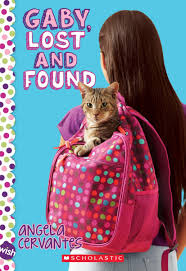
‘Gaby, Lost and Found’ by Angela Cervantes Book Review

‘Gaby, Lost and Found’ by Angela Cervantes explores some tough themes. As though the illegal immigration and forced deportation of her mother, along with her semi-absent father, isn’t enough, Gaby is forced to deal with a couple of school bullies and the gnawing feeling that since she has been left basically alone, she cannot bear to let anyone else – person or animal – feel the same. Gaby’s love of animals takes up the vast majority of the book, as she volunteers with her classmates at an animal shelter, penning notes to help promote the adoption of each furry friend.

Gaby is met with resistance at parts, as she tries to save one particular cat’s life rather than see it get returned to uncaring owners, as well as when she tries to make sense of where her mother is and why she’s there, and no one is able to make her feel better about the situation. She realizes that she has unfortunately found herself unsure of where or to whom to turn as her mother fights to find a way to return to the United States from Honduras.

The only “family” Gaby has outside of her mother and father come in the form of her best friend, Alma, and Alma’s family. There is a support system at work in Gaby’s community, but Alma is truly her best friend, standing up for and by Gaby at most every turn.

In ‘Gaby, Lost and Found,’ Angela Cervantes sheds light on some topics that often don’t get too much press, at least not in the form of fiction books. The writing is young, but the book is written for young people, as it appeals to fourth to seventh graders, so it works well. Young readers who check out this book will be able to see strength, courage, uncertainty, kindness, and truth, among other personality traits, in the characters of the book. Since these are traits that all kids (and adults, for that matter) know well, they will find a stronger connection with the storyline as a result.

You can find ‘Gaby, Lost and Found’ by Angela Cervantes here.

*Review originally posted at YABooksCentral.com*
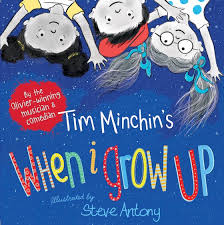
‘When I Grow Up’ by Tim Minchin Book Review

‘When I Grow Up’ by Tim Minchin, and illustrated by Steve Antony, is a fanciful story about the excitement of considering what to be as a grown-up. It not only considers more academically-oriented ideas such as being smart enough to answer all types of questions, but also the more innocent and endearing thoughts of kids who say and think the darndest things, such as being able to eat sweets all of the time, while going to bed as late as one would like. The perspective is endearing, in that it truly shows how children think and what they consider to be the most important aspects of childhood that will clearly pave the way to adulthood.

It would have been nice to see more of the types of careers kids want to be when they grow up, since a lot of kids tend to say they want to be firefighters or teachers or gymnasts, for example. These are all also the thoughts of children, so even a slight focus on each of these ideas, from the same perspective of being a child and how childhood injects more fun into careers, would have been nice. However, the premise of ‘When I Grow Up’ will resonate with readers young and old, increasing nostalgia for one’s youth and capturing the minds of those still in that age range.

You can find ‘When I Grow Up’ by Tim Minchin here.

*Review originally posted at YABooksCentral.com*
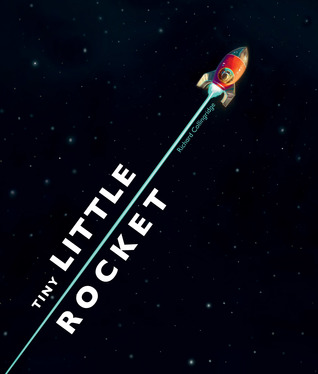
‘Tiny Little Rocket’ by Richard Collingridge Book Review

‘Tiny Little Rocket’ by Richard Collingridge immerses young readers into a journey through space. Through a front-row seat in the cockpit, readers have the pleasure of feeling as though they are piloting the ship, getting a bird’s eye view of the stars, and even the planet Mars. Trips near the sun and a large meteor bring the full weight of the space experience front and center, allowing readers/explorers to take the lead and save the day by taking control and leading the rocket (and themselves) to safety.

Fun and eventful, ‘Tiny Little Rocket’ has engaging illustrations, an educational focus, and challenges readers to be the navigator on their own adventure through some of space’s toughest, but most exciting spots.

You can find ‘Tiny Little Rocket’ by Richard Collingridge here.

*Review originally posted at YABooksCentral.com*
Tip Tuesday: Interesting Writing Strategies

If you are looking for some creative writing help, take some time and watch some movies. You might want to check out a made-for-TV movie that came out in 1990 called The Dreamer of Oz. It starred John Ritter, Rue McClanahan, and Annette O’Toole. The concept behind the movie was how L. Frank Baum, the mastermind behind The Wizard of Oz, came up with his ideas using various methods of creative writing help. It showed how he met various people, held various jobs, and identified with various aspects of his stories, which made the fantastical nature of his writing more magical. The movie showed that he wrote what he knew, but he needed to learn these things he knew by doing creative writing research and employing it within his stories. He had to observe his surroundings and talk to people to gather his ideas.

More recently, Gregory Maguire took the helm in writing a “prequel” to The Wizard of Oz, called Wicked. It has been adapted from book form into script form, and it is now a well-known Broadway play. It details the life and times of Glinda the Good Witch and Elphaba, the Wicked Witch of the West, before they took on those respective roles in the land of Oz. Viewers are able to meet and find out the histories of the scarecrow, the cowardly lion, and the tin man and learn how Oz developed into what it had become once Dorothy showed up. Not only did this involve creative writing research, but also in-depth characterization. The story of the wicked witch took on a whole new meaning, as we saw Oz from her perspective.

Try to find a way to write your own “prequel” to a well-known novel, movie, or even a song. You may find that there is more of a story there than you might think. If you’ve ever wondered what life was like for certain people, or how things turned out certain ways, find your own way to express these musings through your writing. Curiosity can be aroused by one word or phrase that catches a reader’s attention. Find the word or phrase that piques your curiosity, and research it until you find the background and meanings behind it. It is only a mystery to you if you allow it to be.

Consider these movies or books as a means of helping to fuel your creative genius:

The Neverending Story: How would you end this tale? Why does it have to be never ending? There always has to be a story to tell if it is never going to end. What story is that enticing that you can’t get enough of it? Think of the shows you watch or the books you read that you can’t get enough of and start writing your own tale that encourages constant thinking and dedication.

Titanic: This movie told of a love story that occurred on the Titanic before the dreaded sinking of the ship. Re-imagine the ending of this story. Would a happy ending be had, or would Rose end up with her fiancé instead of Leonardo DiCaprio’s character? Maybe you will choose not to write a love story at all, but rather an action-packed adventure detailing the heroics of one man who brought numerous people to safety. Even if the story is not completely true, but instead is based on the ideas that happened on that ship, that’s okay. You just have to remember to say that your story is based on truth, and is not completely non-fiction.

The Catcher in the Rye: The novel detailed the life and times of a young boy who had been kicked out of school and didn’t know what he was going to do with his life. Besides his sister, he didn’t know to whom he should turn, and he found himself in the middle of situations he was not mature enough to handle. Now, think about some strategies that could change the way this book was written. For example, what if the book had been nothing like how J.D. Salinger wrote it? The title connotes the idea of a catcher. This book could have dealt with a worn-out old catcher who brings a bunch of old baseball players together to throw a few balls around in the rye fields on the outskirts of town. The catcher could have played for a famous team, and was cut from the team for some radical reason that he still cannot fully understand. Maybe he was just getting too old, and the team manager didn’t want to hurt his feelings by telling him that.

It’s interesting to think about titles of movies, books, TV shows, and other expressive genres. When you first hear the title, what do you imagine? If it is something other than what that movie, book, or TV show is truly about, you have just found the basis to begin your creative writing research. You can then begin writing your own story based on that title that you mistook the first time you heard or read it.

After you’ve tried something new, feel free to share pieces of it in the comments or let us know what creative writing strategies you employ to help you get your writing started.

Tip Tuesday: Accepting Constructive Criticism

It may seem difficult at times to put your work out there for someone else to critique it, whether it’s for editing in the process of publication, grading, or otherwise. The fact of the matter is that without hearing other people’s opinions, you are obviously bent on your own opinion on the writing you have done, and, let’s be honest – you think it’s great. We all do. It’s only natural to have emotional ties to the writing you have done. It is also possible that something you hated writing or hated the outcome of once it was fully written could be completely loved by one or more of your readers.

Criticism gets a bad rap. The word has a negative connotation. When people hear that someone is being critical or is criticizing something, they think negatively. Again, this is only natural and is a part of life. An important idea to remember, however, is that criticism does not have to be bad. Without criticism, think of how many pieces of writing, movies, TV shows, or other works of art would go out to the masses due to the biased opinion of the work’s creator.

Have you ever read a book you didn’t like? Have you ever watched a movie or TV show that you wish you hadn’t bothered with? Have you ever thought how nice it would be to be able to tell the author or creator of whatever it is you read, watched, etc. what you might have done differently? Everyone is a critic. Everyone judges. It’s something that is as normal as a typical daily routine. Yet, criticism and judgment can turn out positively. There are always at least two sides to every idea/topic/issue/etc. Just because you think something is great doesn’t mean the rest of the world does, and just because you think something was awful doesn’t mean the rest of the world didn’t love it. You are entitled to your opinion just like anyone else. Just because someone tells you that they suggest changing something doesn’t mean you have to do it. It doesn’t mean you have to agree with it. What it does mean is that you have to attempt to see that person’s viewpoint and analyze not only whether you agree with it, but determine whether you feel that others may see things the same way as the original critic. That is why having more than one person read your work and give you feedback is important. Even if the people you choose to read your work do not give the same advice, even if one person tells you how great it was while another says it was good but there was room for improvement, while another tells you they couldn’t stand it, sharing what other people had to say with the group of reviewers you have established for yourself will help you to gauge whether they truly noticed everything in your writing.

Just because you are the writer does not mean you are the only reader that writing will ever have. The definition of constructive criticism is “the process of offering valid and well-reasoned opinions about the work of others, usually involving both positive and negative comments, in a friendly manner rather than an oppositional one. The purpose of constructive criticism is to improve the outcome.” It is essential that this definition is not only remembered, but taken to heart. No writer has ever penned the perfect piece the first time around. If they say they have, they are lying to you. Read the following quotes from well-known people and authors to further your understanding of the power of constructive criticism:

Winston Churchill, Former British Prime Minister:
“Criticism may not be agreeable, but it is necessary. It fulfills the same function as pain in the human body. It calls attention to an unhealthy state of things.”

Hillary Clinton, Politician and Former Presidential Candidate:
“Take criticism seriously, but not personally. If there is truth or merit in the criticism, try to learn from it. Otherwise, let it roll right off you.”

Neil Gaiman, Author:
“I suspect that most authors don’t really want criticism, not even constructive criticism. They want straight-out, unabashed, unashamed, fulsome, informed, naked praise, arriving by the shipload every fifteen minutes or so.”

Why do you think there are reviews on sites that sell books, appliances, and any other item you can possibly think of? The reason is simple. It is because people want to know what others think. They want to see differing opinions to help them make the most informed decision possible. So should it be with writing. Writers must be able to make informed, intelligent decisions based on suggestions that others have made. When something sounds negative, consider the actual intent behind the suggestion, and then determine whether the person is in any way coming up with something that is a possible revision that can be made. Just as you are entitled to your opinion, so are your readers. This is why only certain books make the New York Times Bestseller list, why certain movies and TV shows win Oscars, Golden Globes, and Emmy Awards, why certain music wins Grammys and American Music Awards, etc. If you have ever thought someone unfairly lost an award, an election, or anything else, you have a different opinion than those who did the voting. You are entitled to this. Remember this when someone reads your work and gives you suggestions. Your emotional and other connections with the work you have written is essential to you being motivated to continue writing. This is extremely important. Never forget this. However, don’t forget that others are entitled to their opinions as well, and their opinions may just help you improve your writing and sustain a more solid style from that point forward. Every little bit helps. You just have to see it that way.

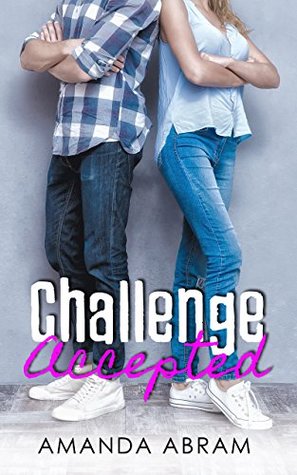
‘Challenge Accepted’ by Amanda Abram Book Review

Readers will find ‘Challenge Accepted’ by Amanda Abram hard to put down. Her writing style perfectly captures teenage life, from the steadfast friendships to the certainty that one knows what is right for oneself without necessarily seeing the bigger picture.

Abrams’ main character, Emma, is literally the girl next door. Yet, despite all of the stories that say otherwise, that does not mean it is a match made in heaven with the boy next door. In fact, it means exactly the opposite. Logan, her next door neighbor, who also happens to be her father’s best friend’s son, is more like her nemesis. They get on each other’s last nerve, and this is only exacerbated by the fact that Logan cheats on a charity compatibility test and winds up with Emma as his supposed “perfect match.”

While Logan’s reasoning for lying on the test doesn’t hold much water – that he wanted to give his girlfriend a reason to break up with him if he wasn’t compatible with her – his decision is a good one. Grace is not the kind of person one wants to be involved with, but more importantly, not the type of person one wants to cross. Logan’s choice only compounds problems for him, especially when it comes to Emma, who he finds himself helping, despite everything he stands for telling him he shouldn’t.

Logan’s egocentric, jerky way of acting around Emma is truly frustrating at times, but the underlying emotions that begin to come out as he spends time with her are realistically developed, as are Emma’s own feelings about Logan, as he tries to help her find her “real” compatibility test match.

The parents in the story and Logan’s and Emma’s friends provide some much needed perspective that the two main characters are loathe to accept much of the time. Sometimes it’s hardest to see what is right in front of you, and Logan and Emma are no exception to this.

A story about the power of reshaping past impressions and forging bonds that seemed impossible, Logan and Emma’s relationship in ‘Challenge Accepted’ is a testament to Amanda Abrams’ dynamic writing style. Readers will be flipping pages well into the night and dying to get back to the story the next day.

You can find ‘Challenge Accepted’ by Amanda Abram here.

*Review originally posted at YABooksCentral.com*